Wednesday, 10 June 2015

Case Study: Flooding in Brisbane Australia


There are many natural and human activities that may cause flooding. Natural causes of flooding include hurricanes, storms, and tsunamis. Heavy rainfall is a major cause of flooding in Australia. Human causes include urbanization, mining, pollution and infrastructure. Flooding is caused by many different natural and human activities.

Social Impacts:
·      Puts a strain on the resources of health services
·      Challenges accessing safe drinking water, medicine and hygienic food
·      Spread of diseases and infections
·      Moulds grow in carpets and walls, damp indoor spaces threaten residents and remediation workers
·      Loss of homes
·      Loss of lives
·      Damaged supply lines
·      Causes injuries
·      Physiological impacts on people (losing family, facing harsh events)

Economic Impacts:

·      Demand increases because on limited supply
·      Firefighters, police officers, and other emergency apparatuses costs increased
·      Federal government has to pay for rescue aid
·      Property damage
·      Income for people in poverty
·      Recovery costs

Environmental Impacts:

·      Water and soil contamination
·      Waterways such as rivers and creeks were eroded, contaminated and littered with debris
·      Large number of fish died
·      Distorts the natural balance of ecosystems
·      Damage to ecosystems
·      Forests are destroyed
·      Wildlife is killed


There have been strategic outcomes put together to achieve the vision. The first strategy is adopting a risk-based approach to managing flooding, by understanding the behavior and consequences of flooding across the full range of responsibilities. Developing guidelines to facilitate consistent approaches to flood risk assessment to allow better comparison of various flood risk reduction options across the catchments, incorporate risk-based considerations into the design of infrastructure located in the floodplain, and providing comprehensive flood information are approaches for to do so. Strategy two includes implementing integrated and adaptive approaches to total water-cycle management, including flooding. This can be done so by taking advantage of new technologies and communication modes to help communities prepare for and respond to flooding and by partnering with communities to build a sense of place and flood readiness in homes, neighborhoods, catchments, and the city. Strategy three is smart planning and building. Locating the right land use in the right place by consideration of how development can be designed and sited to tolerate natural hazards for the full range of flood events, ensuring new development is designed and constructed to be more resilient to flooding, planning for rising sea levels, bigger storms tides and heavier rainfall associated with changing climate, and maximizing the efficiency of the city’s disaster response capability by planning for movement of emergency workers, evacuees supplies around the city during floods through improvements to major road networks and location of key land uses are ways to approach this strategy. Strategy four is to become educated and a resilient community. Encouraging households in flood affected areas to better prepare for and respond to flood events by developing household emergency plans, encouraging businesses in flood affected areas to better prepare for and respond to flood events by preparing business continuity plans, promoting awareness of the extremes of weather are ways to approach this strategy. Strategy five is to further develop capacity to respond to and recover from flood events. Maintaining effective mechanisms, plans and processes to efficiently respond to disaster events, maintaining and enhancing solid and enduring relationships with emergency management agencies and not-for-profit organizations for consistent and open communication and collaboration are ways to approach this strategy. Strategy six is maintaining and investing in flood mitigation assets to support the city’s economic growth. Recognizing limited protection afforded by some flood mitigation infrastructure to encourage preparedness for flooding, inspect, assess and maintain existing flood mitigation infrastructure to ensure its continued, effective functioning, and providing new infrastructure as necessary to support the growth and livability of the city are ways to approach this last strategy.

Waikiki Beach Case Study

Causes of erosion on Waikiki Beach include soil compaction, soil acidity problems, loss of soil structure, poor internal drainage, low organic matter, Pacific’s rough current wearing away the smooth surface of the sand, construction of sea walls, loss of coastal dunes buried by man made structure and fast moving motor crafts.

The past attempts to save the sand of Waikiki Beach have not been successful since it is proved to happen again. Waikiki Beach has been having erosions since the late 1800. Beach erosions in Waikiki have been a problem for decades and have resulted in at least 10 sand replenishment projects since 1939. This means 300,000 cubic yards of sand has been placed onto Waikiki Beach over the past 77 years. Seawalls, groins, piers and storm drains were counted along the Waikiki shoreline to protect itself from erosions by the 1950s. In June 2012, the state’s Department of Land and Natural Resources completed a beach replenishment project, which added 24,000 cubic yards of offshore sand across 1,730 feet of Waikiki Beach. The $2.2 million project was a good attempt although it only lasted for one year. There have been many attempts to save the sand but they were all only temporary, as erosions still continue. I think there should be a long-term plan set by checking on the beach regularly, to make the plan as effective as possible. I think making one large plan that has been created with close consideration of all affects can be successful but may increase in cost. To save the beach, people should be globally aware as many people may not know about the erosions and would be willing to help fund.

Economic Impacts:

·      Fixing erosion damage may be costly
·      Money is required to fix roads and tracks
·      Shrinking Waikiki beach can cause less visitors resulting in hundreds of millions less in expenditures
·      Hawaii relies on tourists for profit
·      The entire economy of the state is greatly shortened due to expenses of beach replenishment, loss of tourists and expensive injuries caused by the beach
·      Less houses and hotels will be sold due to all of the disruption

Social Impacts:

·      Reduced tourist counts
·      Less people on and near the beach
·      Local people have there hobbies (ex. Surfing) restricted because of the danger
·      Jobs may be jeopardized
·      Negative impact on human health

Environmental Impacts:

·      Negatively impacts soil quality
·      Effects air quality as pollution is introduced into the atmosphere
·      Contamination of water
·      Loss of crops

·      Marine and fish lives are effected due to disruption of machinery

Monday, 8 June 2015

Mass Wasting in China - Case Study


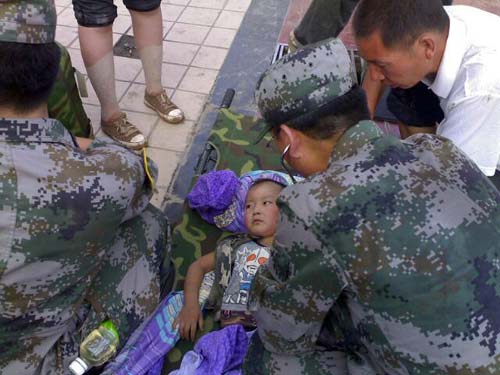
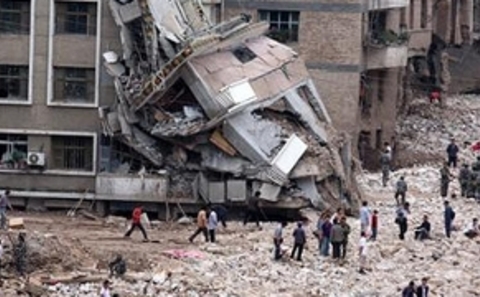
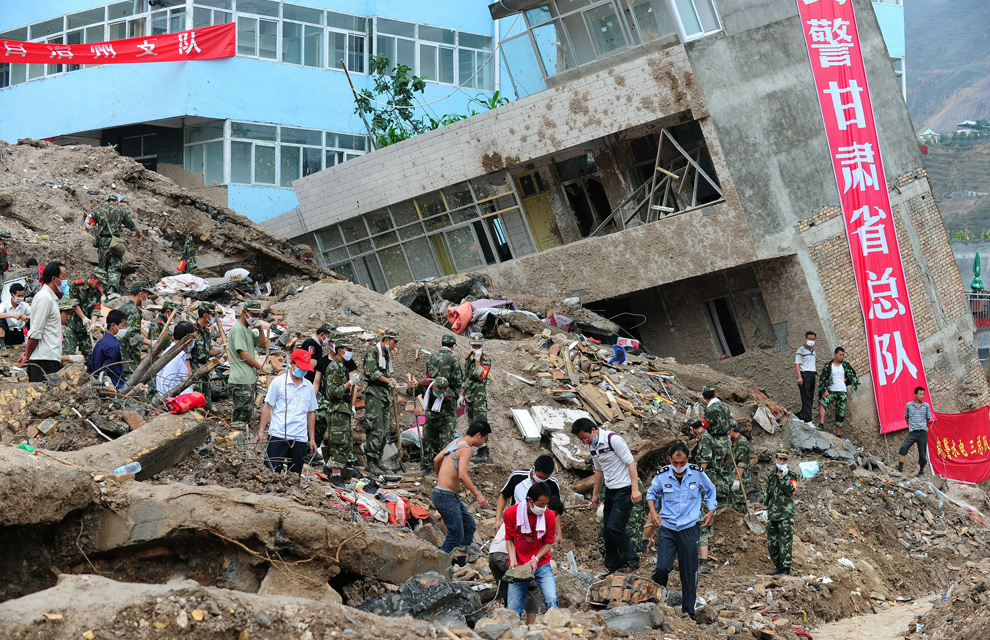
A huge mudslide struck Zhouqu, in Gansu, western China on August 7. More than 1,200 people were declared dead and 490 were missing by August 16. This was the worst landslide in Zhouqu and possibly the worst in China over the passed 60 years.

Zhouqu has experienced many disasters in the recent decades, as it is one of China’s landslide hotspots. The landslide occurred for a number of different reasons. China’s topography is extremely mountainous. Forests have been logged for trees as an industry, stripping the mountainsides and exposing underlying soils and sediments. The weather had been experiencing torrential rains from the monsoon season. The region also experiences large earthquakes. The heavy rainfall and earthquakes occurring on steep slopes where there is slipping soil causes landslides. The anthropogenic causes of landslides are dams, clear cutting, undercutting, etc.


Soldiers have been using explosives to blast through debris that partly dammed the Bailong River and created an unstable lake.  It eventually overflowed and sent a wave of water engulfing the town of Zhouqu early on Sunday.

Meanwhile, specialists in epidemic prevention and medical workers have been sent to the area amid growing fears that contaminated water could spark an outbreak of disease.

This landslide has been devastating as it resulted in many deaths and injuries. Authorities face a growing problem of where to house survivors. More than 1,000 homes were damaged or destroyed and another 3,000 were flooded.

More than 4,000 tents have been sent to Zhouqu but the mountainous terrain means there is little open space to set up camps.


Li Hui, head of the province’s Housing and Urban-Rural Development Bureau, said the new system would provide 12,000 tones of water a day. Safe drinking water will be available within five months.


This landslide could have been prevented from stabilizing the ground and by building retaining walls that won’t compromise the shear plane of the land. Communities could have prevented damage by the landslide by avoiding houses being built on a slope or close by one.

Families are asked to avoid returning to homes because there could be massive destruction. Many prevention programs are created to prevent a future disaster. Recovery efforts and assistance is available from other cities and service workers.