Wednesday, 10 June 2015

Waikiki Beach Case Study

Causes of erosion on Waikiki Beach include soil compaction, soil acidity problems, loss of soil structure, poor internal drainage, low organic matter, Pacific’s rough current wearing away the smooth surface of the sand, construction of sea walls, loss of coastal dunes buried by man made structure and fast moving motor crafts.

The past attempts to save the sand of Waikiki Beach have not been successful since it is proved to happen again. Waikiki Beach has been having erosions since the late 1800. Beach erosions in Waikiki have been a problem for decades and have resulted in at least 10 sand replenishment projects since 1939. This means 300,000 cubic yards of sand has been placed onto Waikiki Beach over the past 77 years. Seawalls, groins, piers and storm drains were counted along the Waikiki shoreline to protect itself from erosions by the 1950s. In June 2012, the state’s Department of Land and Natural Resources completed a beach replenishment project, which added 24,000 cubic yards of offshore sand across 1,730 feet of Waikiki Beach. The $2.2 million project was a good attempt although it only lasted for one year. There have been many attempts to save the sand but they were all only temporary, as erosions still continue. I think there should be a long-term plan set by checking on the beach regularly, to make the plan as effective as possible. I think making one large plan that has been created with close consideration of all affects can be successful but may increase in cost. To save the beach, people should be globally aware as many people may not know about the erosions and would be willing to help fund.

Economic Impacts:

·      Fixing erosion damage may be costly
·      Money is required to fix roads and tracks
·      Shrinking Waikiki beach can cause less visitors resulting in hundreds of millions less in expenditures
·      Hawaii relies on tourists for profit
·      The entire economy of the state is greatly shortened due to expenses of beach replenishment, loss of tourists and expensive injuries caused by the beach
·      Less houses and hotels will be sold due to all of the disruption

Social Impacts:

·      Reduced tourist counts
·      Less people on and near the beach
·      Local people have there hobbies (ex. Surfing) restricted because of the danger
·      Jobs may be jeopardized
·      Negative impact on human health

Environmental Impacts:

·      Negatively impacts soil quality
·      Effects air quality as pollution is introduced into the atmosphere
·      Contamination of water
·      Loss of crops

·      Marine and fish lives are effected due to disruption of machinery

Monday, 8 June 2015

Mass Wasting in China - Case Study


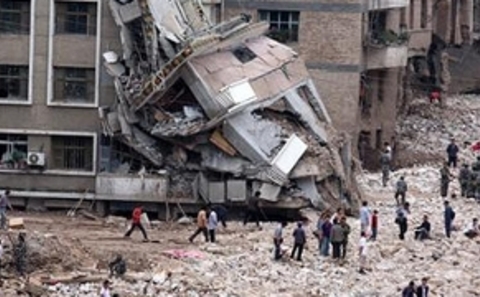
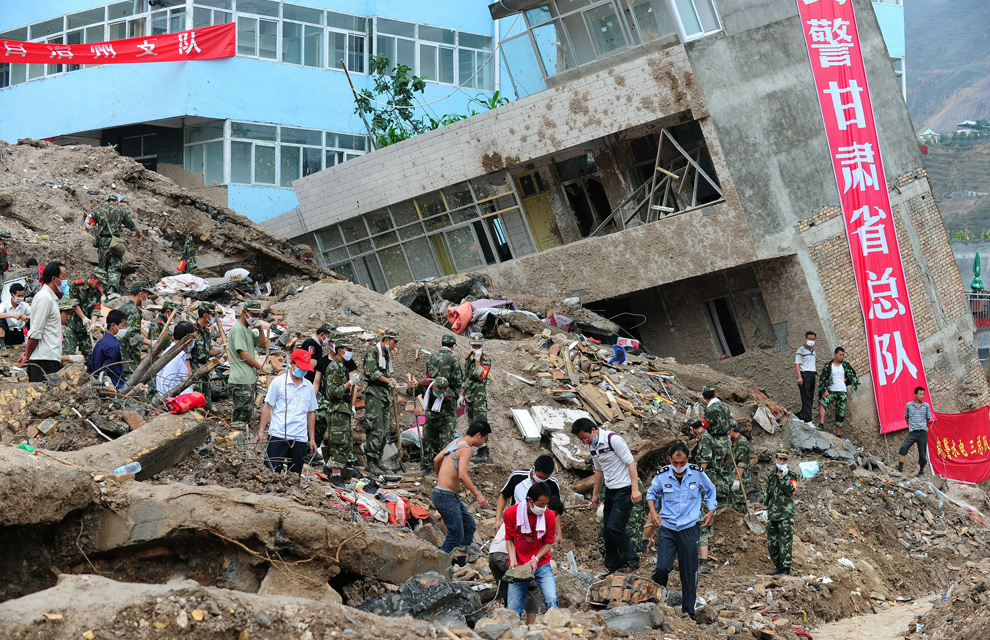
A huge mudslide struck Zhouqu, in Gansu, western China on August 7. More than 1,200 people were declared dead and 490 were missing by August 16. This was the worst landslide in Zhouqu and possibly the worst in China over the passed 60 years.

Zhouqu has experienced many disasters in the recent decades, as it is one of China’s landslide hotspots. The landslide occurred for a number of different reasons. China’s topography is extremely mountainous. Forests have been logged for trees as an industry, stripping the mountainsides and exposing underlying soils and sediments. The weather had been experiencing torrential rains from the monsoon season. The region also experiences large earthquakes. The heavy rainfall and earthquakes occurring on steep slopes where there is slipping soil causes landslides. The anthropogenic causes of landslides are dams, clear cutting, undercutting, etc.


Soldiers have been using explosives to blast through debris that partly dammed the Bailong River and created an unstable lake.  It eventually overflowed and sent a wave of water engulfing the town of Zhouqu early on Sunday.

Meanwhile, specialists in epidemic prevention and medical workers have been sent to the area amid growing fears that contaminated water could spark an outbreak of disease.

This landslide has been devastating as it resulted in many deaths and injuries. Authorities face a growing problem of where to house survivors. More than 1,000 homes were damaged or destroyed and another 3,000 were flooded.

More than 4,000 tents have been sent to Zhouqu but the mountainous terrain means there is little open space to set up camps.


Li Hui, head of the province’s Housing and Urban-Rural Development Bureau, said the new system would provide 12,000 tones of water a day. Safe drinking water will be available within five months.


This landslide could have been prevented from stabilizing the ground and by building retaining walls that won’t compromise the shear plane of the land. Communities could have prevented damage by the landslide by avoiding houses being built on a slope or close by one.

Families are asked to avoid returning to homes because there could be massive destruction. Many prevention programs are created to prevent a future disaster. Recovery efforts and assistance is available from other cities and service workers.

Sunday, 7 June 2015

Case Study: Land subsistence in the American Southwest


Land subsidence is the lowering of the land-surface elevation from changes that take place underground. Human activity pumping water, oil, and gas from underground reservoirs; dissolution of limestone aquifers (sinkholes); collapse of underground mines; drainage of organic soils; and initial wetting of dry soils (hydrocompaction) are all common causes of land subsidence. Overdrafting of aquifers is the major cause of subsidence in the southwestern United States. As ground water pumping increases, land subsidence increases as well. In many aquifers, ground water is pumped from pore spaces between grains of sand and gravel. If an aquifer has beds of clay or silt within or next to it, the lowered water pressure in the sand and gravel causes slow drainage of water from the clay  and silt beds. Land subsidence has been getting worse over the passed few years because large amount of ground water has been excessively withdrawn from aquifers. Reduced water pressure is a loss of support for the clay and silt beds, since these beds are compressible they compact and it results with a lowering of the land surface.

Land subsidence has many impacts including changes in elevation and slope of streams, canals, and drains; damage to bridges, roads, railroads, storm drains, sanitary sewers, canals, and levees; damage to private and public buildings; and failure of well casings from forces generated by compaction of fine-grained materials in aquifer systems. Subsidence has resulted in tides moving into low-lying areas that were previously above high-tide levels, in some coastal areas.

In some areas where ground water pumping has causes subsidence, switching from ground water to surface water supplies has stopped the subsidence. If surface water is not available, then other means must be taken to reduce subsidence. Possibilities include reducing water use and determining locations for pumping and artificial recharge that will minimize subsidence. 

Water Use in Agriculture


Drip irrigation is the most common type of “micro-irrigation”. This method includes water running through small horizontal pipes (with holes in them) either buried or lying slightly above the ground next to the crops that slowly drip water onto the crops roots and stems.

            Pros:
·      Is low pressure, low volume irrigation system suitable for high-return value crops such as fruits and vegetable crops.
·      Can increase yields and decrease water, fertilizer and labor requirements.
·      Applies water only to the plants root zone, saving water because of the high application efficiency and high water distribution
·      Any water-soluble fertilizer may be injected through a micro-irrigation system.
           
            Cons:
·      Costly investment
·      Requires frequent maintenance
·      Requires constant monitoring


Sprinkler Irrigation is a method of applying irrigation water, which is similar to rainfall. Water is distributed through a system of pipes usually by pumping. It is then sprayed into the air and irrigated entire soil surface through spray heads so that it breaks up into small water drops, which fall to the ground.

            Pros:
·      Low pressure to save energy
·      Achieves high uniformity of application
·      Water irrigated efficiently if combined with a scheduling system
·      Easy to apply
·      Fixed systems are cheaper to manage

            Cons:
·      Higher capital costs
·      Needs care in windy conditions so uniformity isn’t distorted


Surface irrigation is one of the oldest methods, where farmers flow water down small trenches running through their crops.

            Pros:
·      Cheap / low-tech method
·      Less water is lost to evaporation
·      Less affected by climate and water factors
·      Easy to see effectiveness

            Cons:
·      More water can be lost from runoff at the edges of the fields
·      More labor required
·      Drainage could be an issue
·      May be a higher disease pressure

My Opinion:

I would say sprinkler irrigation is the best of the three for farmers use. I chose this method because it has the most pros and the least cons, so it would be the best choice in my opinion. Sprinkler irrigation has low pressure to save energy, achieves high uniformity of application, is a scheduled system, is easy to apply and is cheap to manage. The main downside of this method is that it is costly however the efficiency is great; therefore sprinkler irrigation would be the best of the three methods.