Tuesday, 2 June 2015

Rhine River Case Study


The River Rhine rises in the Swiss Alps about 3,353 meters above sea level and flows north, passing through or bordering Switzerland, Liechtenstein, Australia, Germany, France, and the Netherlands.  The factors that make the Rhine River the “Industrial Heartland” include that it encompassed the major empires, enabled trade and economic growth, linked European countries together and it is the most efficient way to transport people and goods. The physical body of water also enabled industrialization to occur more effectively.

The industrial heartland of North America is the Rust Belt; it is the region straddling the upper Northeastern United States, the Great Lakes, and the Midwest States. It is surrounded by water causing it to be a suitable area for trade and for the growth of the economy.  The Great Lakes and nearby Appalachia were utilized for transportation and natural resources. This enabled thriving coal and steel industries.

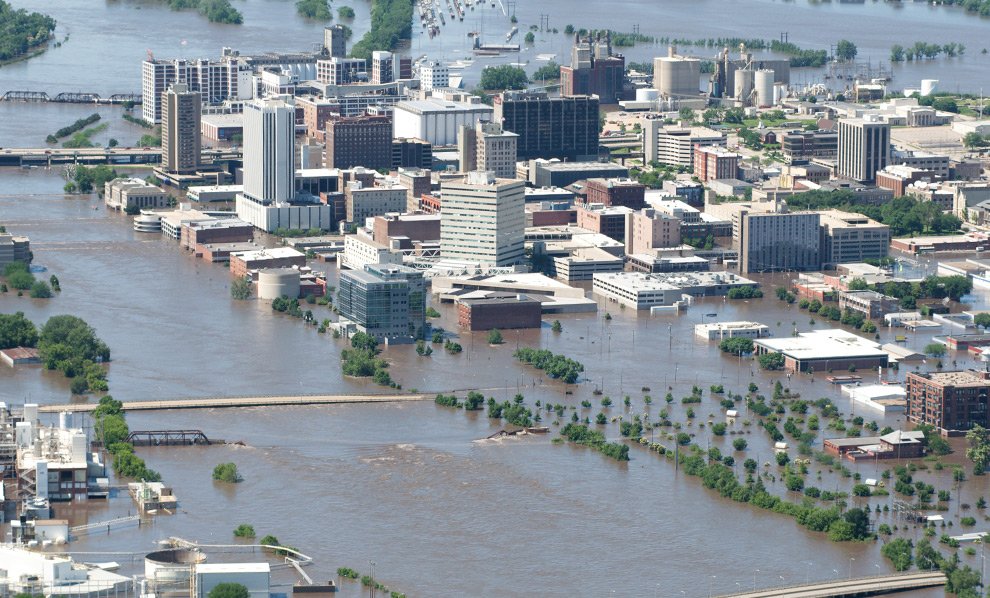
There are many impacts that human activity has had on the Rhine River basin. Farmland or buildings have replaced the Rhine’s riverside marsh and floodplain, which was used to hold back floodwater. Improved flood protection measures upstream cause the floodwater to move downstream more quickly than it used to. The river has been involved in a straightening process due to improved navigation for shipping; meaning the distance has been reduced, so this means that water moves downstream more quickly. Urbanization in the Rhine catchment area has also helped flooding due to the fact that the concrete and tarmac send more water to the river than the fields they replaced. The upper Rhine is used for generating hydroelectric power. These are all human causes on the Rhine River.


Reincorporating vegetation into the surrounding areas of the river where meadows and fields used to be would be an aiding solution to the flooding issue of Rhine River. It would act as an infiltration system and absorb excess waters, however it would be difficult to implement by people as times are getting more industrialized and advanced and more natural land is being replaced by buildings instead of the other way around. Reinforcing earth dykes with steel piling with stone blocks to reduce erosion is another solution that could be difficulty implementing as it would be costly, tedious and time consuming enhancing every dyke with steel however it would be worth it in the long run. Limiting residential development in areas where flood risks are likely is another solution to prolonging the longevity of people in this country however the houses in this area are most likely cheaper and more affordable for families that cannot support the expenses of another house therefore stopping people from living in these areas could end up putting people on the streets and killing them anyway. Allowing the river to flow back through marshland areas which had been previously been sealed off for navigation purposes would create a much further journey for the river to flow, lessening the intensity and speed of flooding however it would be inconvenient for travelers and shipping purposes as the journey would be much longer than if the river took a shorter route.

Saturday, 23 May 2015

Aquaculture


Define Aquaculture: 

Aquaculture is also known as fish or shellfish farming. It refers to the breeding, rearing and harvesting of plants and animals in all types of water environment including ponds, rivers, lakes and oceans. Aquaculture produces food fish, sport fish, bait fish, ornamental fish, crustaceans, mollusks, algae, sea vegetables and fish eggs.

Looking at social (on people), environmental, and economic pros and cons of aquaculture.

Social

            Pros:
·      Creates jobs in the community
·      Helps feed growing world population
·      Meets increasing consumer demand for seafood

            Cons:
·      May conflict with other users of water bodies such as lobstermen, fishermen or migrating fish
·      May threaten livelihood of fishermen
·      May have an impact on consumers health because of chemicals found in fish that come from fish farms

Environmental

            Pros:
·      Places more emphasis on protecting coastal waters from pollution, especially in the case of mollusk and seaweed culture
·      Fish farms can me made anywhere on the environment such as coastal areas, inland lakes, and rivers.
·      It is the fastest growing method of food production

            Cons:
·      Can pollute water systems with excess nutrients such as fish feed and wastes, chemicals and antibiotics
·      Can compromise the aesthetic beauty of coastlines
·      Issue with water contamination

Economic

            Pros:
·      Increases revenue on the city, state, and national level
·      Reduces seafood trade deficit
·      Encourages local investments

            Cons:
·      Can be an unpredictable enterprise for small local communities due to its susceptibility to severe weather, predators, disease, and global competition.
·      Causes a decrease in supply and demand depending on the limited amount of healthy fish or varying consumer demands
·      Requires a lot of funding

My point of view on aquaculture:


Considering the pros and cons of aquaculture, I would say it is a bad thing because of the negative impacts it brings. Aquaculture has impacts socially, environmentally and economically.  Socially, it has an impact on consumer’s health because of chemicals found in fish that come from fish farms. Environmentally, it pollutes water systems with excess nutrients (fish feed & wastes), chemicals and antibiotics. Economically, it is an unpredictable enterprise for small local communities due to its susceptibility to severe weather, predators, disease and global competition. Overall looking at the impacts it has in the different ways, it concludes to impact humans negatively in many ways. In my opinion aquaculture is not a good thing, mainly because of the fact that it puts a risks human health.

Monday, 18 May 2015

Case Study: Along the Cascadia Subduction Zone


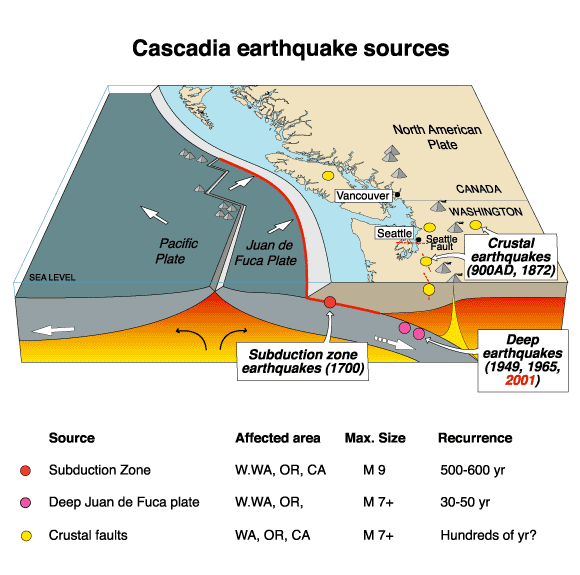
Looking at the geology of where Vancouver is and what lies near and beneath its surface, one can understand why Vancouver is at such high risk for earthquakes. There are plates subducting below the less dense, North American plate which is descending below the continental plate at a rate of 45 mm/year. Subduction occurs along the Cascadia subduction zone. This is the second largest tectonically active fault system in North America. The subduction zone has ruptured several times over history, causing great earthquakes. Much of the force that leads the oceanic plates to subduct beneath the North American plate is generated by a ridge system. The largest ridge in Vancouver is the Juan de Fuca ridge. Grinding of the plates as it moves along the aforementioned faults generates stress. Plate interaction along any of the convergent, divergent, or transform faults may cause the buildup of stress which will lead to an earthquake. With the evidence of past earthquakes we know a major one will occur in the area along the Cascadia subduction zone at any time. The geological setting makes this densely populated region susceptible to frequent seismic activity.  Vancouver has an increased risk of disastrous megathrust earthquakes, the region is surrounded by the Coast Mountains and the Pacific Ocean making it isolated and vulnerable during a large earthquake.


Liquefaction : Is a phenomenon in which the strength and stiffness of soil is reduced by earthquake shaking. This is a hazard because when it occurs, the strength of the soil decreases and the ability of soil deposit to support foundations for buildings and bridges is reduced. It can be responsible for a tremendous amount of damage and a hazard for many lives.


Landslides : Is the movement of rock, debris or earth down a slope. They result from the failure of the materials which make up the hill slope and are driven by the force of gravity. Sudden and rapid  events are most dangerous because of the lack of warning and the speed at which material can travel down the slope, also the force on the resulting impact. Extremely slow landslides may not be a threat to people but it can cause considerable damage to property. There are many resources that could be ruined, for example water supplies, fisheries, and roads. Landslides can cause massive destruction which will impact the economy as for all of the repair.


Tsunami : Are giant waves caused by earthquakes or volcanic eruptions under the sea. A the waves travel inland, they build up to higher and higher heights as he depth of the ocean decreases. The speed of tsunmai waves depends on ocean depth rather than distance from the source of the wave. In some cases they can result in floods reaching up to 100 feet in height. They can cause a lot of property damage, environmental damage and leaving many lives at risk.


Flooding : Is a natural event where an area that is dry land, suddenly gets submerged under water, Floods that happen in areas where people live in, the water carries along the objects such as houses, bridges, cars, furniture, and even people. It can wipe away farms and trees as well.
Social Impact : Earthquake hazards pose serious intermediate term risk to health and safety and economic viability. They demonstrate risks to industrial societies from the event, affecting everything from massive loss of life, infrastructure damage and financial instability. Earthquakes can have short term and long term impacts. Short terms would include people being injured, destroyed homes, disruption to transportation and communication. Long term impacts would include a disease being spread and peopling having to re-house.


Economic Impact : Earthquakes can result in massive destruction of roads, bridges, farms, houses, automobiles and people become homeless. The government deploys fireman, police and other emergency apparatuses to help the affected. Everything comes at a heavy cost to the people and the government. It takes years for affected communities to be re-built and businesses to come back to normal.


Infrastructure Impacts : Earthquakes can effect availability of many services and elements of infrastructure. The large and violent movement of the ground caused by an earthquake will disrupt many services. Electric line poles are vulnerable to damage. No electricity results in no light, heat and no water. Land-line phones will not have service as the towers may be damaged. Natural gas pipelines could also be broken. Almost all stores rely on supplies being brought by trucks, so supply lines will be impacted. Local airports and train facilities can also be damaged. Bridges, buildings, and hospitals can be destroyed or damaged causing a great effect.


Preparedness: Communities in Metro Vancouver are preparing for the impending earthquake by making a significant investment to assess earthquake risk, upgrade infrastructure and develop emergency plans. The city has developed the Earthquake Preparedness Strategy to reduce the impact of an earthquake in Vancouver. The strategies fall under four categories; earthquake risk assessment, earthquake risk reduction, earthquake preparedness and earthquake response and recovery. Families have made small changes in there homes for their safety as well. For example storing food and water, having an identified family meeting location, have an emergency prepared plan and kit, buying self powered radios and flashlights, hanging pictures and home decor away from where people may sit, and by simply placing heavy objects on lower shelves.


Tuesday, 12 May 2015

Fishing

Fishermen:

Fishermen are heavily dependent on the fishing industry. Fishing is their career and therefore it is needed to support and provide for their families. Fishing has a positive impact for fishermen since it’s their job, so if they don’t supply it consumers won’t be able to get fish and the government would be disappointed because they want profit.

Consumers:

Consumers depend on fishing for food as it’s a part of their diet. Fish provides many health benefits such as vitamins, minerals or fatty acids. Fishing has a positive impact for consumers because they demand it for food. Fish is used in many different dishes and served in many different restaurants; therefore it may be consumed every day for some people.

Government:

The government is dependent on the fishing industry because of the profit it gets from fish companies. Fishing has a positive impact for the government as people will continue to consume and pay for the fish, causing the fishing industry to flourish.

Environment:


Environmentalists are concerned about the marine life because it disrupts the food web if specific species are targeted. Ecological disruption causes fishing to have a negative feedback.  

Fishing in Brazil:


Brazil’s vast territory, large biodiversity, lack of extreme temperatures and abundance of water grant a huge potential. Brazilians have a large consumption an appreciation for fish and seafood and have established a strong industry in the country. Brazil produces 1.25 million tones of fish. The fishing activity generates a GDP of 5 billion BRL, mobilizing 800,000 professionals among fisherman and fish farmers. The Brazilian industrial fishing is considered a fundamental activity, supplying raw materials to major industries linked to food distributors centers. Overfishing is threatening to decimate Brazil’s seafood resource and the latest danger concerns the country’s sardine catch. The problem of fishing reaches a crisis, where hake yields in excess of recommended levels posing a threat to preservation of the biomass in the seas. Brazil is a huge country with one of the largest coastlines in the world; therefore fish and seafood are important parts of the Brazilian cuisine. Species depletion will greatly influence Brazilians because of there everyday diet of fish and seafood.